ZIP includes coach cards, maps, timeline, rotations and JSON. To save a PDF, choose Save as PDF in your browser print dialog.
Player arrivals and departures
Use anonymous numbers from 1 to 99. Changes take effect before an activity begins; each activity needs 4–16 players.
Your practice
Choose whether to carry forward or keep possession.
U9–U1060 min8 starting players24 × 30 mField practice
Bring 8 balls and 16 cones. Use ground play and line targets. Keep water available.
Look for progress
Carry when the route is visibly clear.
Turn and use support when both forward routes are closed.
Check the surface, boundaries and equipment before play. Pause or simplify whenever needed. Confirm local youth football rules. Numbered slots replace names.
Begin at walking pace in the numbered stations. Look along a lane; carry when a partner says clear and turn to offer a return pass when they say blocked. Share the ball when needed; an observer watches the same decision and takes a ball turn on the next assigned round.
See a route; do not force one. The action matches the lane instead of the desire to go forward.
Run the activity
Look along a lane; carry when a partner says clear and turn to offer a return pass when they say blocked.
Pause on a raised hand and point to the space you chose.
Swap the ball on the round signal and notice this feature: The action matches the lane instead of the desire to go forward.
Play
Look along a lane; carry when a partner says clear and turn to offer a return pass when they say blocked.
Ground play only. No heading, sliding, body contact or tackles at a player's feet. Intercept loose ground passes only. Offer water or a pause whenever needed.
Watch for
The action matches the lane instead of the desire to go forward.
If you see: The carrier continues after hearing blocked.
Try: Stop the ball, name the two possible actions and repeat the cue.
Organisation
2 separate stations. Roles: carrier, receiver, signal observer; extra players observe. Advance one slot each round. 4 turns cover every player. A first carrier turn can take up to 180s of activity. Waiting is active observation; add balls or reduce group size if it becomes too long.
Next step: Replace words with a visible hand signal.
Move on: Stop the balls and identify the start positions for traffic cue.
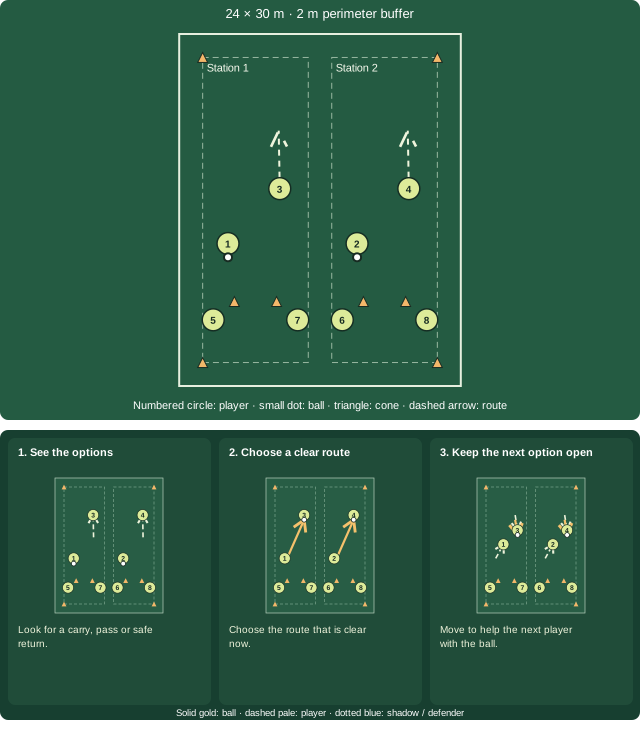
24 × 30 m clear area with a 2 m perimeter buffer. 2 numbered stations, 8 numbered player slots, 2 balls and 8 cones. Each station shares one ball and rotates roles; dashed arrow shows an example travel or pass route. Focus: Choose whether to carry forward or keep possession. Diagram shows starting positions, not fixed player locations. Three steps show decision game using the first round's numbered players. Solid gold routes show the ball; dashed pale routes show player movement; dotted blue routes show a shadow or defender. Routes stay inside each numbered station. 1. See the options: Look for a carry, pass or safe return. 2. Choose a clear route: Choose the route that is clear now. 3. Keep the next option open: Move to help the next player with the ball.
Round-by-round player roles
Round
Assignments
1 · 60s
1: carrier (station 1); 3: receiver (station 1); 5: signal observer (station 1); 7: observer / next carrier (station 1); 2: carrier (station 2); 4: receiver (station 2); 6: signal observer (station 2); 8: observer / next carrier (station 2)
2 · 60s
1: observer / next carrier (station 1); 3: carrier (station 1); 5: receiver (station 1); 7: signal observer (station 1); 2: observer / next carrier (station 2); 4: carrier (station 2); 6: receiver (station 2); 8: signal observer (station 2)
3 · 60s
1: signal observer (station 1); 3: observer / next carrier (station 1); 5: carrier (station 1); 7: receiver (station 1); 2: signal observer (station 2); 4: observer / next carrier (station 2); 6: carrier (station 2); 8: receiver (station 2)
4 · 60s
1: receiver (station 1); 3: signal observer (station 1); 5: observer / next carrier (station 1); 7: carrier (station 1); 2: receiver (station 2); 4: signal observer (station 2); 6: observer / next carrier (station 2); 8: carrier (station 2)
5 · 60s
1: carrier (station 1); 3: receiver (station 1); 5: signal observer (station 1); 7: observer / next carrier (station 1); 2: carrier (station 2); 4: receiver (station 2); 6: signal observer (station 2); 8: observer / next carrier (station 2)
6 · 60s
1: observer / next carrier (station 1); 3: carrier (station 1); 5: receiver (station 1); 7: signal observer (station 1); 2: observer / next carrier (station 2); 4: carrier (station 2); 6: receiver (station 2); 8: signal observer (station 2)
7 · 60s
1: signal observer (station 1); 3: observer / next carrier (station 1); 5: carrier (station 1); 7: receiver (station 1); 2: signal observer (station 2); 4: observer / next carrier (station 2); 6: carrier (station 2); 8: receiver (station 2)
C = carrier · R = receiver · Q = signal observer · O = observer / next carrier. Times are activity seconds; briefing, rest and transition are separate.
Use a carrier and a return receiver. An observer or coach calls the state of the forward lane.
See a route; do not force one. The action matches the lane instead of the desire to go forward.
Run the activity
Scan the lane before starting.
On clear, carry to the far line; on blocked, turn and pass back.
Receiver asks what evidence led to that action.
Play
Scan the lane before starting.
Ground play only. No heading, sliding, body contact or tackles at a player's feet. Intercept loose ground passes only. Offer water or a pause whenever needed.
Watch for
The action matches the lane instead of the desire to go forward.
If you see: The carrier continues after hearing blocked.
Try: Stop the ball, name the two possible actions and repeat the cue.
Organisation
2 separate stations. Roles: carrier, receiver, signal observer; extra players observe. Advance one slot each round. 4 turns cover every player. A first carrier turn can take up to 180s of activity. Waiting is active observation; add balls or reduce group size if it becomes too long.
Next step: Replace words with a visible hand signal.
Move on: Stop in place, recall the action matches the lane instead of the desire to go forward. and walk to water with the balls still.
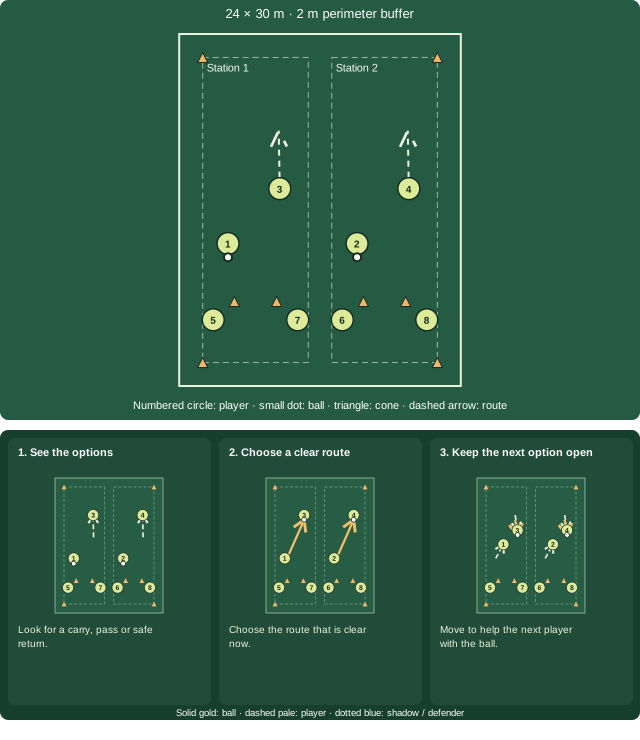
24 × 30 m clear area with a 2 m perimeter buffer. 2 numbered stations, 8 numbered player slots, 2 balls and 8 cones. Each station shares one ball and rotates roles; dashed arrow shows an example travel or pass route. Focus: Choose whether to carry forward or keep possession. Diagram shows starting positions, not fixed player locations. Three steps show decision game using the first round's numbered players. Solid gold routes show the ball; dashed pale routes show player movement; dotted blue routes show a shadow or defender. Routes stay inside each numbered station. 1. See the options: Look for a carry, pass or safe return. 2. Choose a clear route: Choose the route that is clear now. 3. Keep the next option open: Move to help the next player with the ball.
Round-by-round player roles
Round
Assignments
1 · 60s
1: carrier (station 1); 3: receiver (station 1); 5: signal observer (station 1); 7: observer / next carrier (station 1); 2: carrier (station 2); 4: receiver (station 2); 6: signal observer (station 2); 8: observer / next carrier (station 2)
2 · 60s
1: observer / next carrier (station 1); 3: carrier (station 1); 5: receiver (station 1); 7: signal observer (station 1); 2: observer / next carrier (station 2); 4: carrier (station 2); 6: receiver (station 2); 8: signal observer (station 2)
3 · 60s
1: signal observer (station 1); 3: observer / next carrier (station 1); 5: carrier (station 1); 7: receiver (station 1); 2: signal observer (station 2); 4: observer / next carrier (station 2); 6: carrier (station 2); 8: receiver (station 2)
4 · 60s
1: receiver (station 1); 3: signal observer (station 1); 5: observer / next carrier (station 1); 7: carrier (station 1); 2: receiver (station 2); 4: signal observer (station 2); 6: observer / next carrier (station 2); 8: carrier (station 2)
5 · 60s
1: carrier (station 1); 3: receiver (station 1); 5: signal observer (station 1); 7: observer / next carrier (station 1); 2: carrier (station 2); 4: receiver (station 2); 6: signal observer (station 2); 8: observer / next carrier (station 2)
6 · 60s
1: observer / next carrier (station 1); 3: carrier (station 1); 5: receiver (station 1); 7: signal observer (station 1); 2: observer / next carrier (station 2); 4: carrier (station 2); 6: receiver (station 2); 8: signal observer (station 2)
7 · 60s
1: signal observer (station 1); 3: observer / next carrier (station 1); 5: carrier (station 1); 7: receiver (station 1); 2: signal observer (station 2); 4: observer / next carrier (station 2); 6: carrier (station 2); 8: receiver (station 2)
8 · 60s
1: receiver (station 1); 3: signal observer (station 1); 5: observer / next carrier (station 1); 7: carrier (station 1); 2: receiver (station 2); 4: signal observer (station 2); 6: observer / next carrier (station 2); 8: carrier (station 2)
9 · 60s
1: carrier (station 1); 3: receiver (station 1); 5: signal observer (station 1); 7: observer / next carrier (station 1); 2: carrier (station 2); 4: receiver (station 2); 6: signal observer (station 2); 8: observer / next carrier (station 2)
10 · 60s
1: observer / next carrier (station 1); 3: carrier (station 1); 5: receiver (station 1); 7: signal observer (station 1); 2: observer / next carrier (station 2); 4: carrier (station 2); 6: receiver (station 2); 8: signal observer (station 2)
C = carrier · R = receiver · Q = signal observer · O = observer / next carrier. Times are activity seconds; briefing, rest and transition are separate.
Offer water and rest. Leave balls still outside the walking route. Before restarting, show the next decision: A patient pass is followed by movement that changes the next choice.
See a route; do not force one. Every player has a rest opportunity and understands the next start position.
Run the activity
Stop every ball and offer water or seated rest.
Check the surface, clear the next station and keep boundary buffers empty.
Name what to look for next: A patient pass is followed by movement that changes the next choice.
Play
Stop every ball and offer water or seated rest.
Ground play only. No heading, sliding, body contact or tackles at a player's feet. Intercept loose ground passes only. Offer water or a pause whenever needed.
Watch for
Every player has a rest opportunity and understands the next start position.
If you see: Players begin moving balls while others cross the area.
Try: Keep every ball still until the area is clear and all players have heard the start signal.
Easier: Demonstrate only the first action, then begin slowly.
Next step: Invite a player to point out the next receiving or observation position.
Move on: Show the first decision in read the lane before the restart signal.
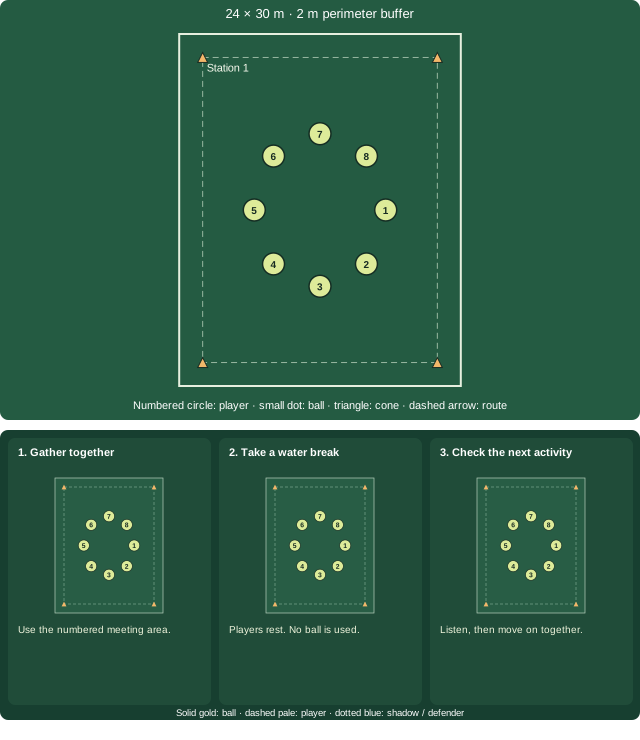
24 × 30 m clear area with a 2 m perimeter buffer. 1 numbered stations, 8 numbered player slots, 0 balls and 4 cones. Players gather for rest or reflection; no ball is used. Focus: Choose whether to carry forward or keep possession. Diagram shows starting positions, not fixed player locations.
A signal observer indicates a blocked half of the station. The receiver remains available behind the ball.
See a route; do not force one. A patient pass is followed by movement that changes the next choice.
Run the activity
Carrier checks whether the remaining half is clear enough to use.
Carry into clear space or return the ball if neither route is available.
After recycling, move sideways to create a new forward angle.
Play
Carrier checks whether the remaining half is clear enough to use.
Ground play only. No heading, sliding, body contact or tackles at a player's feet. Intercept loose ground passes only. Offer water or a pause whenever needed.
Watch for
A patient pass is followed by movement that changes the next choice.
If you see: The same blocked route is retried without repositioning.
Try: Require the receiver to move sideways after each return.
Organisation
2 separate stations. Roles: carrier, receiver, signal observer; extra players observe. Advance one slot each round. 4 turns cover every player. A first carrier turn can take up to 180s of activity. Waiting is active observation; add balls or reduce group size if it becomes too long.
Easier: Use one forward route and one reliable return option.
Next step: Observer may close both routes once per attempt.
Move on: Stop the station balls, show the game target lines and explain this condition: Score over the end line; recycle whenever both forward routes are blocked.
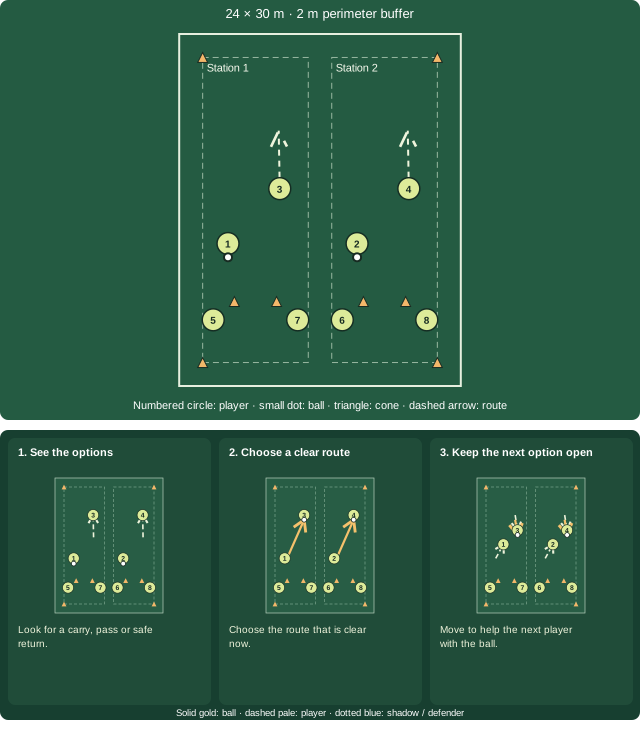
24 × 30 m clear area with a 2 m perimeter buffer. 2 numbered stations, 8 numbered player slots, 2 balls and 8 cones. Each station shares one ball and rotates roles; dashed arrow shows an example travel or pass route. Focus: Choose whether to carry forward or keep possession. Diagram shows starting positions, not fixed player locations. Three steps show decision game using the first round's numbered players. Solid gold routes show the ball; dashed pale routes show player movement; dotted blue routes show a shadow or defender. Routes stay inside each numbered station. 1. See the options: Look for a carry, pass or safe return. 2. Choose a clear route: Choose the route that is clear now. 3. Keep the next option open: Move to help the next player with the ball.
Round-by-round player roles
Round
Assignments
1 · 60s
1: carrier (station 1); 3: receiver (station 1); 5: signal observer (station 1); 7: observer / next carrier (station 1); 2: carrier (station 2); 4: receiver (station 2); 6: signal observer (station 2); 8: observer / next carrier (station 2)
2 · 60s
1: observer / next carrier (station 1); 3: carrier (station 1); 5: receiver (station 1); 7: signal observer (station 1); 2: observer / next carrier (station 2); 4: carrier (station 2); 6: receiver (station 2); 8: signal observer (station 2)
3 · 60s
1: signal observer (station 1); 3: observer / next carrier (station 1); 5: carrier (station 1); 7: receiver (station 1); 2: signal observer (station 2); 4: observer / next carrier (station 2); 6: carrier (station 2); 8: receiver (station 2)
4 · 60s
1: receiver (station 1); 3: signal observer (station 1); 5: observer / next carrier (station 1); 7: carrier (station 1); 2: receiver (station 2); 4: signal observer (station 2); 6: observer / next carrier (station 2); 8: carrier (station 2)
5 · 60s
1: carrier (station 1); 3: receiver (station 1); 5: signal observer (station 1); 7: observer / next carrier (station 1); 2: carrier (station 2); 4: receiver (station 2); 6: signal observer (station 2); 8: observer / next carrier (station 2)
6 · 60s
1: observer / next carrier (station 1); 3: carrier (station 1); 5: receiver (station 1); 7: signal observer (station 1); 2: observer / next carrier (station 2); 4: carrier (station 2); 6: receiver (station 2); 8: signal observer (station 2)
7 · 60s
1: signal observer (station 1); 3: observer / next carrier (station 1); 5: carrier (station 1); 7: receiver (station 1); 2: signal observer (station 2); 4: observer / next carrier (station 2); 6: carrier (station 2); 8: receiver (station 2)
8 · 60s
1: receiver (station 1); 3: signal observer (station 1); 5: observer / next carrier (station 1); 7: carrier (station 1); 2: receiver (station 2); 4: signal observer (station 2); 6: observer / next carrier (station 2); 8: carrier (station 2)
9 · 60s
1: carrier (station 1); 3: receiver (station 1); 5: signal observer (station 1); 7: observer / next carrier (station 1); 2: carrier (station 2); 4: receiver (station 2); 6: signal observer (station 2); 8: observer / next carrier (station 2)
10 · 60s
1: observer / next carrier (station 1); 3: carrier (station 1); 5: receiver (station 1); 7: signal observer (station 1); 2: observer / next carrier (station 2); 4: carrier (station 2); 6: receiver (station 2); 8: signal observer (station 2)
11 · 60s
1: signal observer (station 1); 3: observer / next carrier (station 1); 5: carrier (station 1); 7: receiver (station 1); 2: signal observer (station 2); 4: observer / next carrier (station 2); 6: carrier (station 2); 8: receiver (station 2)
12 · 60s
1: receiver (station 1); 3: signal observer (station 1); 5: observer / next carrier (station 1); 7: carrier (station 1); 2: receiver (station 2); 4: signal observer (station 2); 6: observer / next carrier (station 2); 8: carrier (station 2)
C = carrier · R = receiver · Q = signal observer · O = observer / next carrier. Times are activity seconds; briefing, rest and transition are separate.
Score over the end line; recycle whenever both forward routes are blocked. Use the numbered teams and neutral roles for this pitch. Agree line targets inside the shown area. Restart with a gentle ground pass; opponents retreat at least two metres until the first touch.
See a route; do not force one. Record one useful forward carry and one useful recycle chosen from the actual space.
Run the activity
Before each round, explain the scoring condition: Score over the end line; recycle whenever both forward routes are blocked.
Play within the marked pitch using the current numbered roles; restart from the nearest boundary after the ball leaves.
At the next pause, give one observed example: Record one useful forward carry and one useful recycle chosen from the actual space.
Play
Before each round, explain the scoring condition: Score over the end line; recycle whenever both forward routes are blocked.
Ground play only. No heading, sliding, body contact or tackles at a player's feet. Intercept loose ground passes only. Offer water or a pause whenever needed.
Watch for
Record one useful forward carry and one useful recycle chosen from the actual space.
If you see: The same blocked route is retried without repositioning.
Try: Require the receiver to move sideways after each return.
Organisation
2 pitches. Teams use numbered A/B slots. Odd groups use a neutral who helps the team with the ball. Rotate slot assignments between rounds; everyone plays and each odd-pitch player takes a neutral turn.
Easier: Pause at each restart to show the available choice. Use one forward route and one reliable return option.
Next step: Observer may close both routes once per attempt.
Move on: Stop every ball, bring the numbered groups together and leave a clear space for walking or seated reflection.
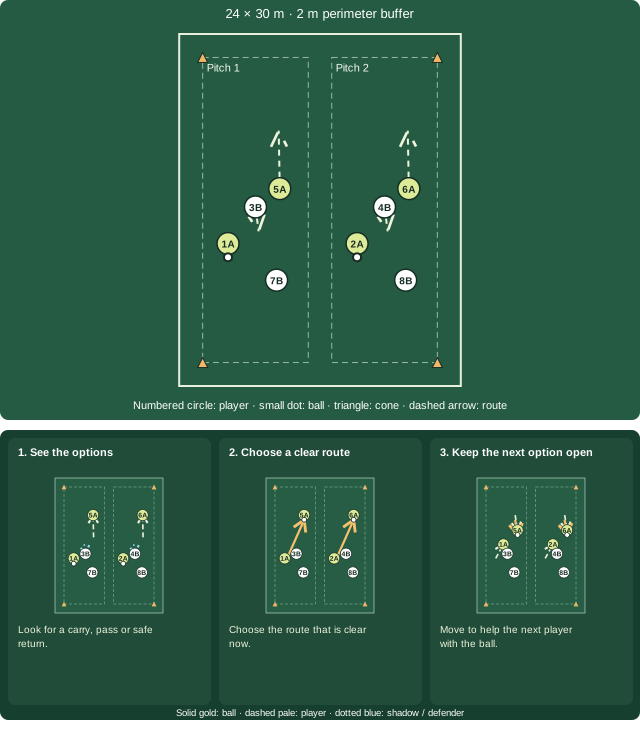
24 × 30 m clear area with a 2 m perimeter buffer. 2 numbered pitches, 8 numbered player slots, 2 balls and 4 cones. A and B are teams; N is the supporting neutral. End lines are scoring targets. Focus: Choose whether to carry forward or keep possession. Diagram shows starting positions, not fixed player locations. Three steps show decision game using the first round's numbered players. Solid gold routes show the ball; dashed pale routes show player movement; dotted blue routes show a shadow or defender. Routes stay inside each numbered station. 1. See the options: Look for a carry, pass or safe return. 2. Choose a clear route: Choose the route that is clear now. 3. Keep the next option open: Move to help the next player with the ball.
Round-by-round player roles
Round
Assignments
1 · 180s
1: team A (station 1); 3: team B (station 1); 5: team A (station 1); 7: team B (station 1); 2: team A (station 2); 4: team B (station 2); 6: team A (station 2); 8: team B (station 2)
2 · 180s
1: team B (station 1); 3: team A (station 1); 5: team B (station 1); 7: team A (station 1); 2: team B (station 2); 4: team A (station 2); 6: team B (station 2); 8: team A (station 2)
3 · 180s
1: team A (station 1); 3: team B (station 1); 5: team A (station 1); 7: team B (station 1); 2: team A (station 2); 4: team B (station 2); 6: team A (station 2); 8: team B (station 2)
4 · 180s
1: team B (station 1); 3: team A (station 1); 5: team B (station 1); 7: team A (station 1); 2: team B (station 2); 4: team A (station 2); 6: team B (station 2); 8: team A (station 2)
Leave the balls still and walk comfortably within your own station. Recall one choice from the session, then ask: When did a patient pass create a better chance?
See a route; do not force one. Carry when the route is visibly clear. Turn and use support when both forward routes are closed.
Run the activity
Leave all balls still; choose comfortable walking or seated rest.
Point to the movement you remember without a ball, then reflect: When did a patient pass create a better chance?
Share one observed example or say that you need another look; count the players and equipment before finishing.
Play
Leave all balls still; choose comfortable walking or seated rest.
Ground play only. No heading, sliding, body contact or tackles at a player's feet. Intercept loose ground passes only. Offer water or a pause whenever needed.
Watch for
Carry when the route is visibly clear. Turn and use support when both forward routes are closed.
If you see: The review names only the score and misses the choice that led to it.
Try: Ask for one specific example: Record one useful forward carry and one useful recycle chosen from the actual space.
Easier: Allow a pointing gesture or one word instead of a spoken explanation.
Next step: Invite a player to explain what they would change if the same route closed next time.
Move on: Check every player and collect stationary equipment before leaving the area.
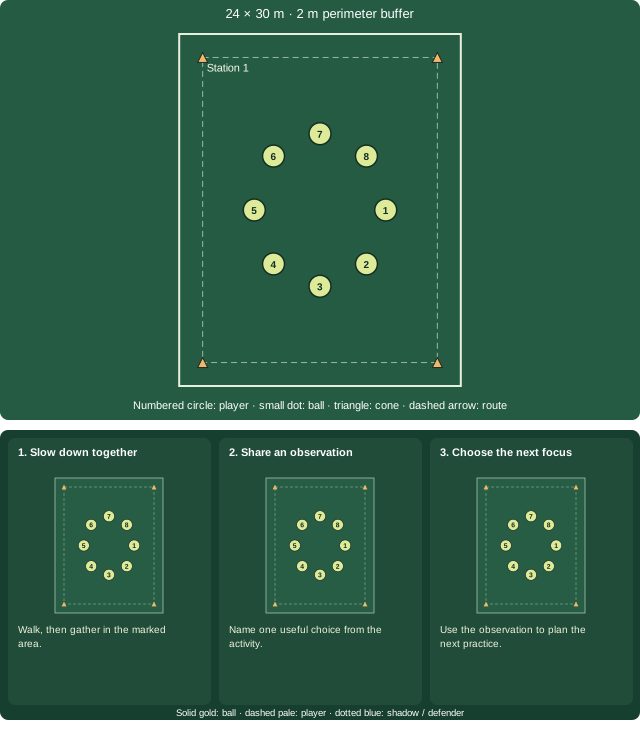
24 × 30 m clear area with a 2 m perimeter buffer. 1 numbered stations, 8 numbered player slots, 0 balls and 4 cones. Players gather for rest or reflection; no ball is used. Focus: Choose whether to carry forward or keep possession. Diagram shows starting positions, not fixed player locations.